← Back to Projects
Enterprise Innovation AI Agent Ecosystem Design Sprint Facilitation Parsons × Bayer Collaboration

Bayer.
Sprint Intelligence
Ecosystem.

A design sprint only runs as well as the person facilitating it. Bayer had a handful of those people, in a handful of cities. We built a system so any team could run one without waiting for that person to be free.

How might we democratize innovation sprints across a global enterprise?

Bayer's innovation practice was expensive to run, geographically concentrated, and dependent on a small pool of trained facilitators. Sprint knowledge lived in that facilitator's head and evaporated the moment the session ended. We were brought in to change the system underneath it, not just design another workshop template.

What is a 5-day design sprint?
A structured process (map the problem, sketch, decide, prototype, test) that compresses months of debate into a single week. It only works with a trained facilitator steering the room. That dependency was the constraint we were designing against.

Dynamic shared ownership

Innovation was fragmented across divisions, each operating in isolation. Ownership needed to move from individual facilitators to a shared structure any team could plug into.

Scaling the practice

Sprint methodology lived in a handful of regional hubs, which kept global teams from running sessions on their own. Scaling meant transferring facilitator judgment into a system, not just a manual.

What we heard from Bayer's teams.

Research combined stakeholder interviews, contextual inquiry, and analysis of past sprint artifacts with Bayer's innovation leads, product owners, and facilitators across the organization's global divisions. Four insight clusters emerged, and became the direct architecture of the system we built.

Bayer didn't need more facilitators.
It needed facilitation to stop depending on specific people.

Every gap traced back to the same root: sprint knowledge lived in individuals, not in the organization.

01
Facilitation is the bottleneck
02
Institutional memory doesn't persist
03
Ownership isn't distributed
04
Scale needs structure, not more people
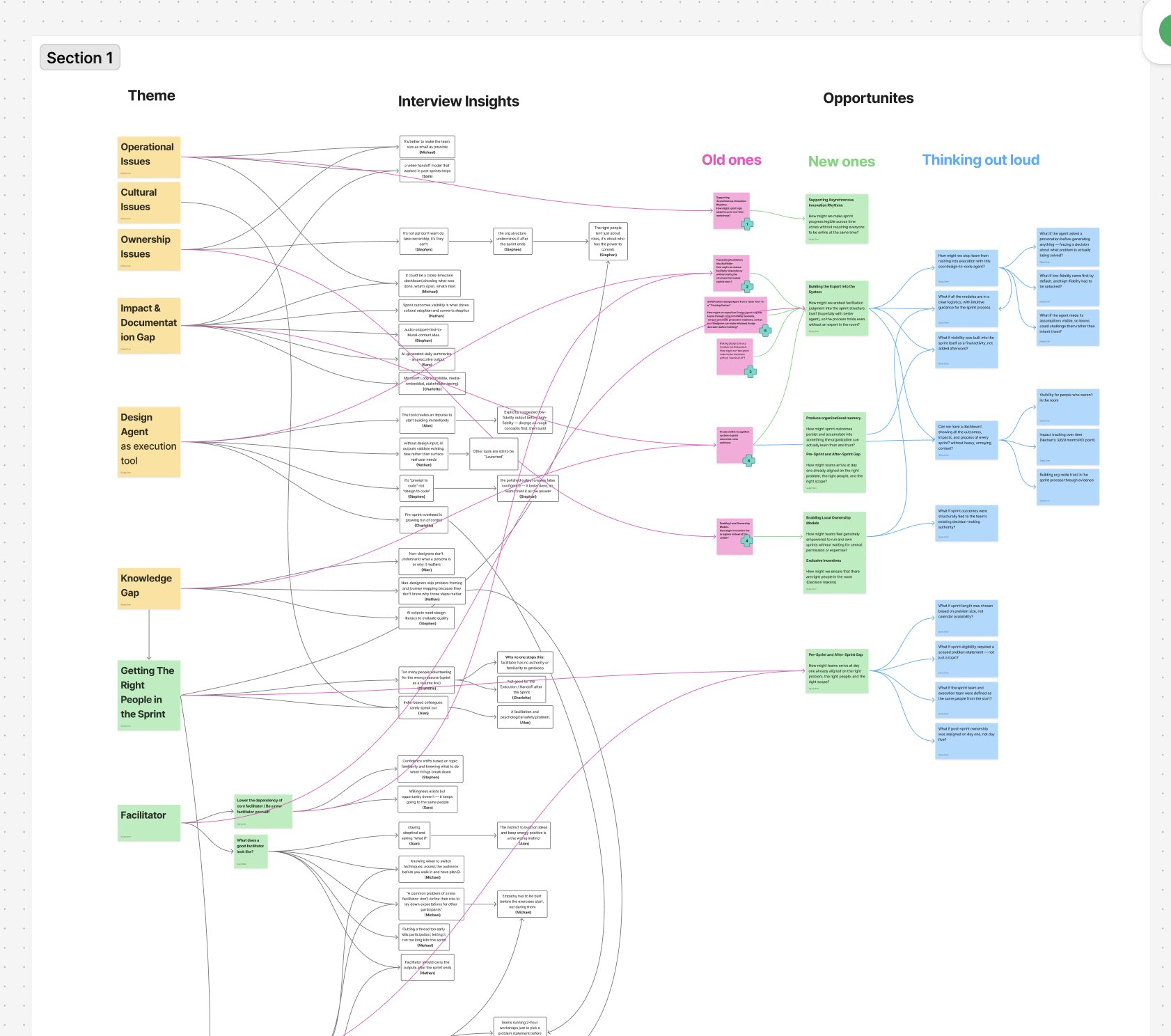
Affinity map connecting interview themes to insights to opportunity areas

Synthesis. Every quote mapped to a theme, then traced into an opportunity area.
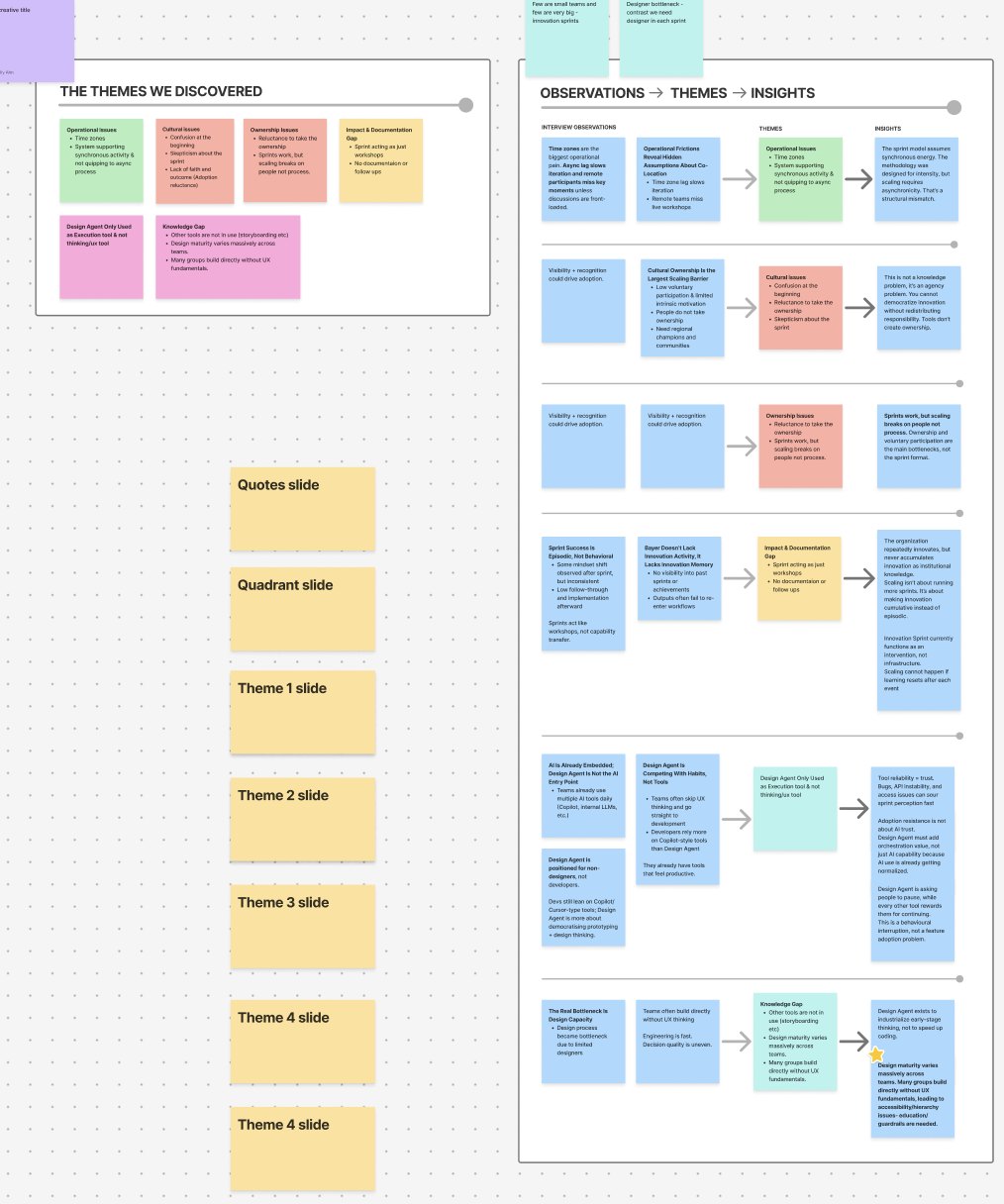
Board tracing raw observations through themes into insights

Observations to insights. Field notes pushed through themes until each produced a claim we could design against.
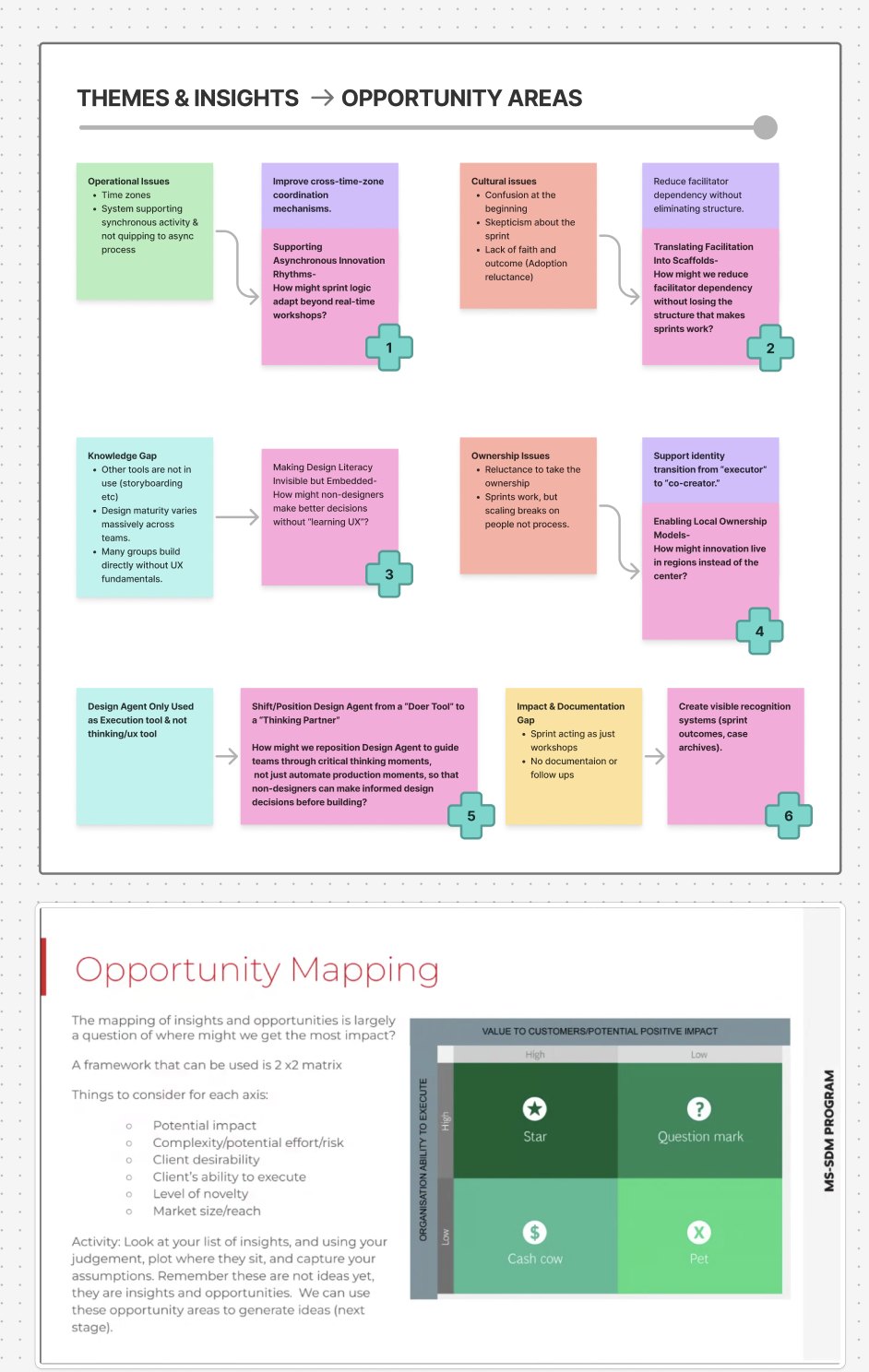
Themes and insights mapped into six numbered opportunity areas

Opportunity areas. Six framed opportunities, each plotted for impact against ability to execute.

Click any board to view it full size.

One ecosystem. Three connected tools.

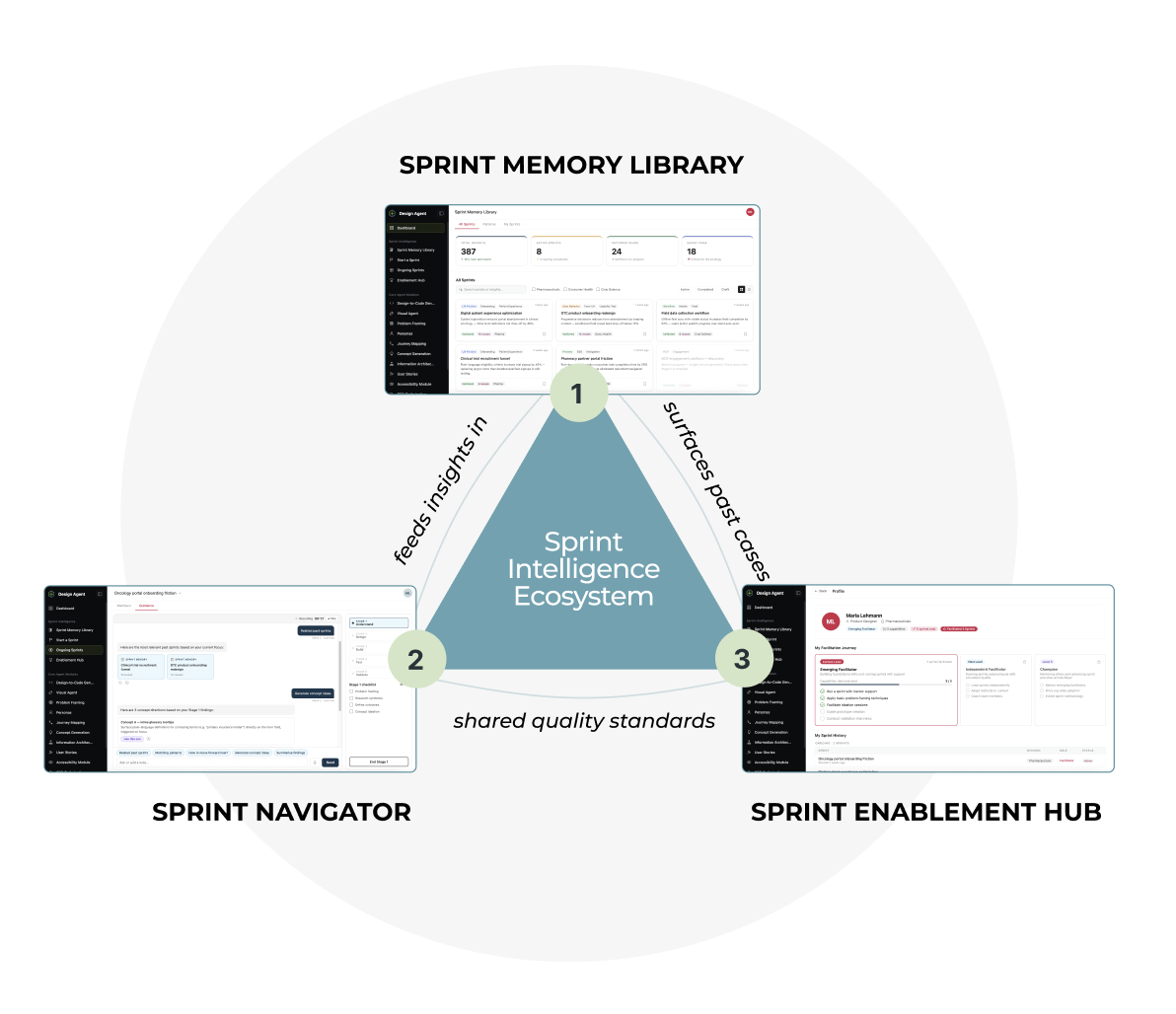
Each tool answers one of the four insight clusters above. The three aren't separate products. They're a loop: the Memory Library surfaces past cases to the Enablement Hub, the Hub holds shared quality standards with the Navigator, and the Navigator feeds new insights back into the Library. Knowledge from one sprint becomes the starting condition for the next.

Diagram showing how Sprint Memory Library, Sprint Navigator, and Sprint Enablement Hub connect into one Sprint Intelligence Ecosystem

The connective tissue. Each tool is only useful because of what the other two send it. Remove any one and the loop stops compounding.

01 · Organizational Memory
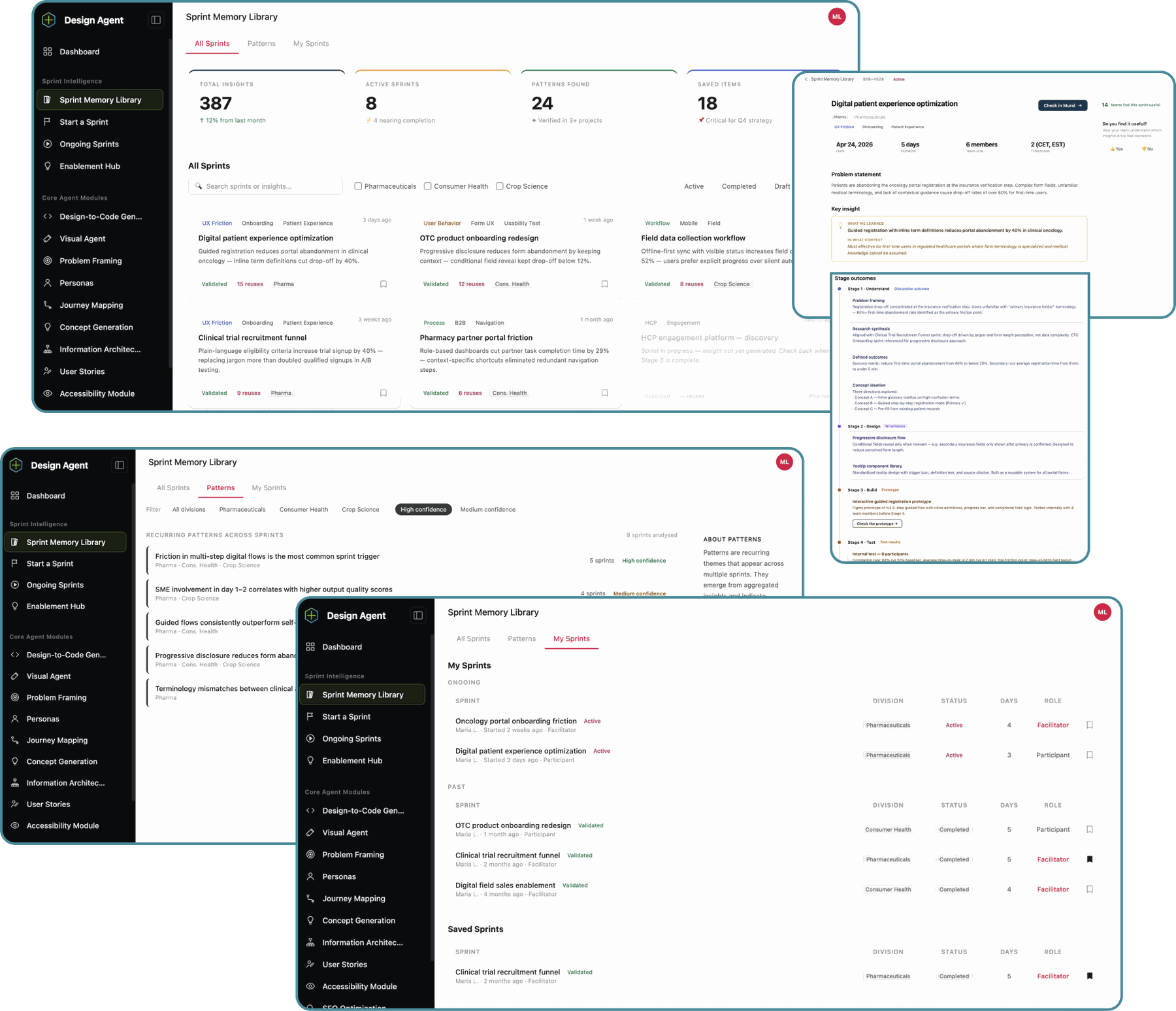
Sprint Memory Library
A sprint repository at its core. Every sprint is stored as a structured record, so knowledge compounds instead of disappearing after the session.
  • Filterable repository. Every sprint held as a structured record.
  • Pattern layer. Recurring signals elevated into cross-team structural findings.
  • Personal view. Active, past, and saved sprints in one place.
  • Insight cards. Outcomes tagged by validation level, so future teams get a signal, not just an archive.
02 · Cognitive Guidance
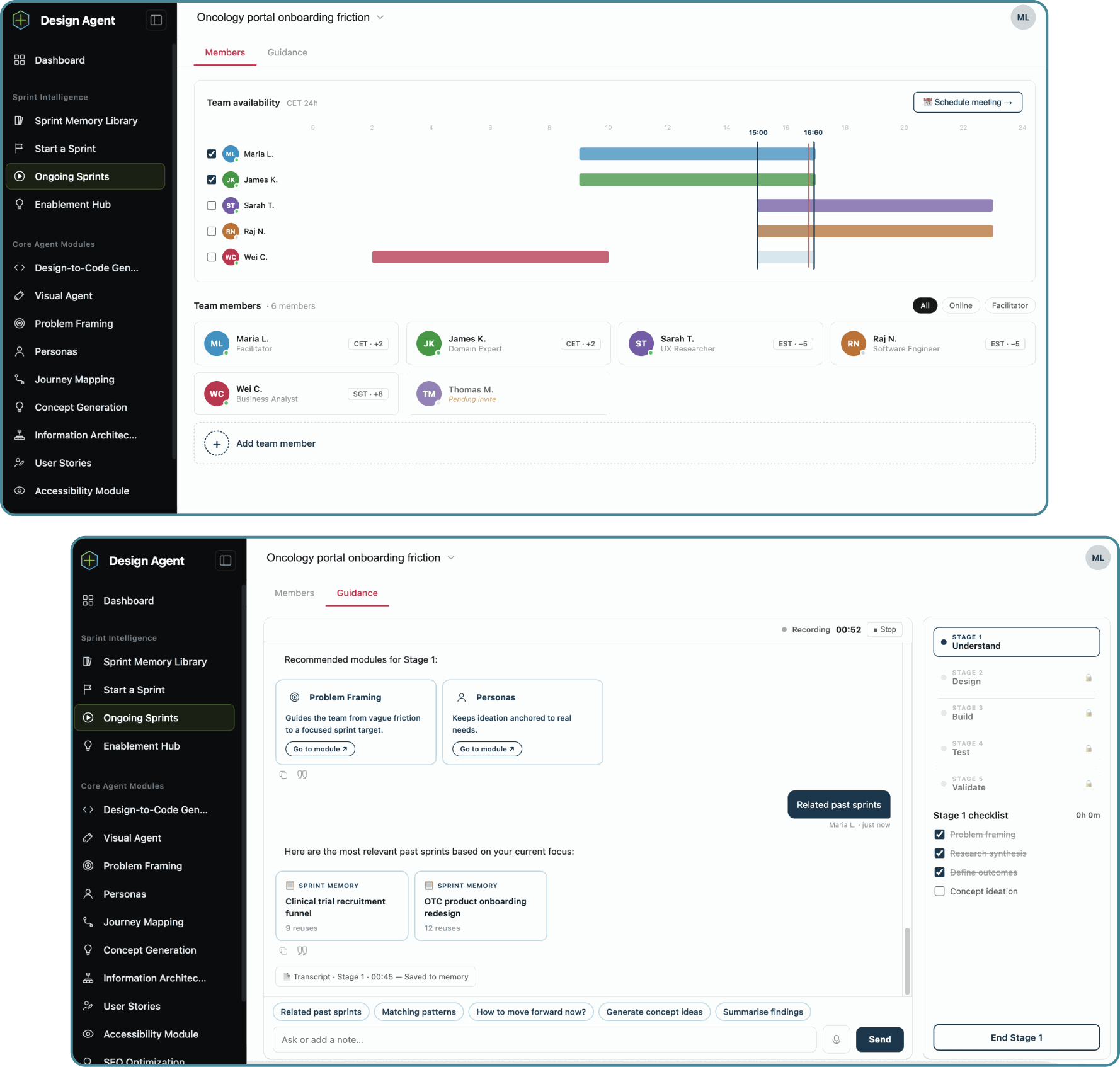
Sprint Navigator
An intelligent co-facilitator. Structure and judgment live in the system, so sprint quality doesn't depend on who's in the room that week.
  • Team composition. Timezone availability and experience levels across all members.
  • Five stages. Each with its own diligence checklist.
  • Memory-grounded chat. Guidance aware of the team's problem, division, and stage.
  • Quality gates. Standards enforced by the system, not by facilitator judgment.
  • Challenge-back. Pushes on the team's reasoning mid-discussion.
03 · Distributed Capability
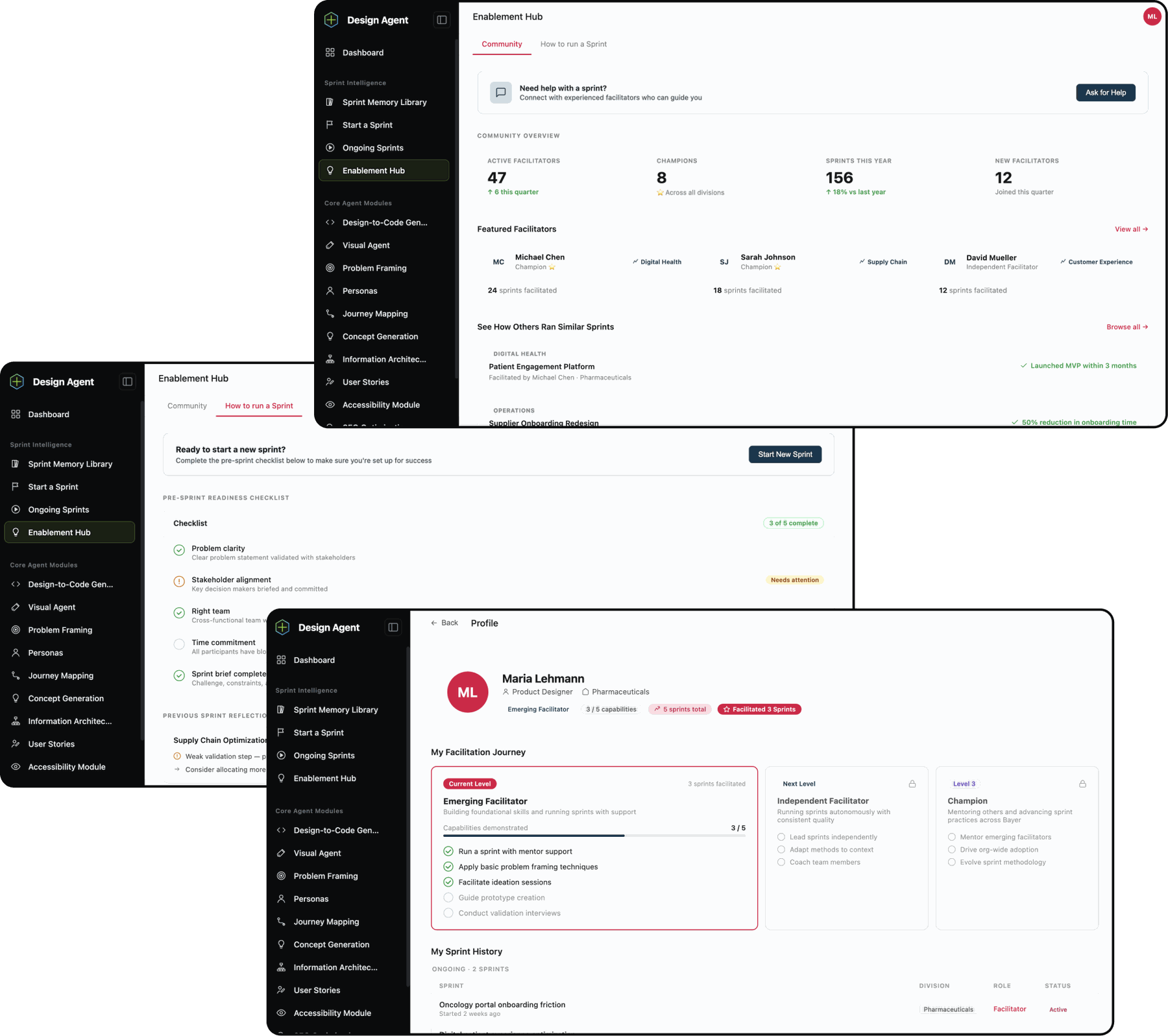
Sprint Enablement Hub
Capability-building infrastructure. Turns facilitation from a scarce central resource into a distributed, governed capability.
  • Certification pathway. Progression tracked on sprints actually facilitated.
  • Readiness check. Capability verified before someone runs a real sprint.
  • Community layer. Recognition and regional peer networks that sustain participation.
  • Facilitator profiles. Experience made visible across regions, not just at the center.

Designed with Bayer's teams, not for them.

We ran co-creation workshops and multiple rounds of testing with Bayer's innovation leads, product owners, and facilitators. Concepts were rapidly prototyped and tested in real sprint contexts before we committed to high fidelity, then presented to Bayer's innovation leadership team.

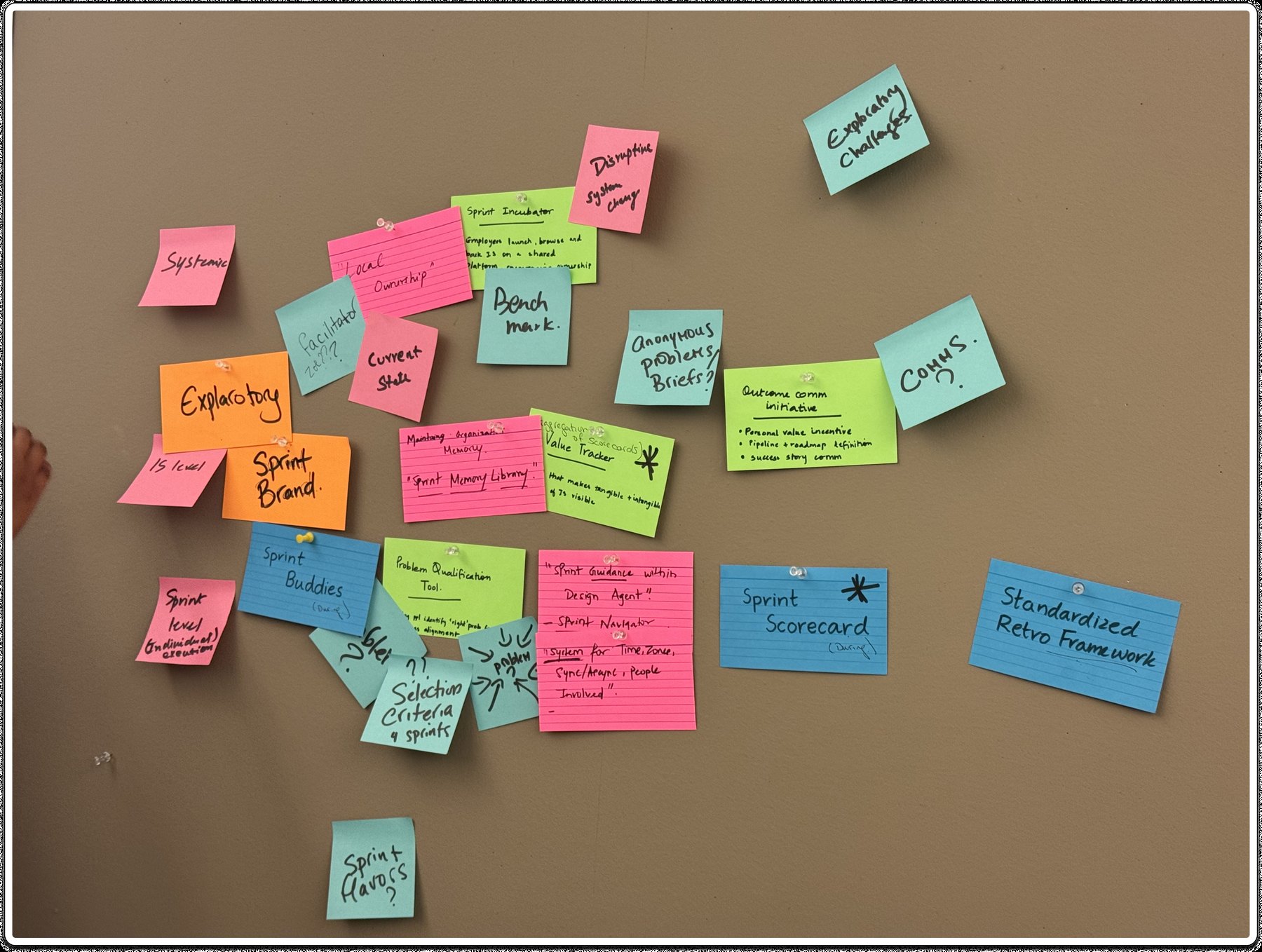
Wall of handwritten sticky notes and index cards from a co-creation workshop

Co-creation workshop. Where the three tools got their names. "Sprint Memory Library" and "Sprint Navigator" are both visible here as index cards, before either had a screen.

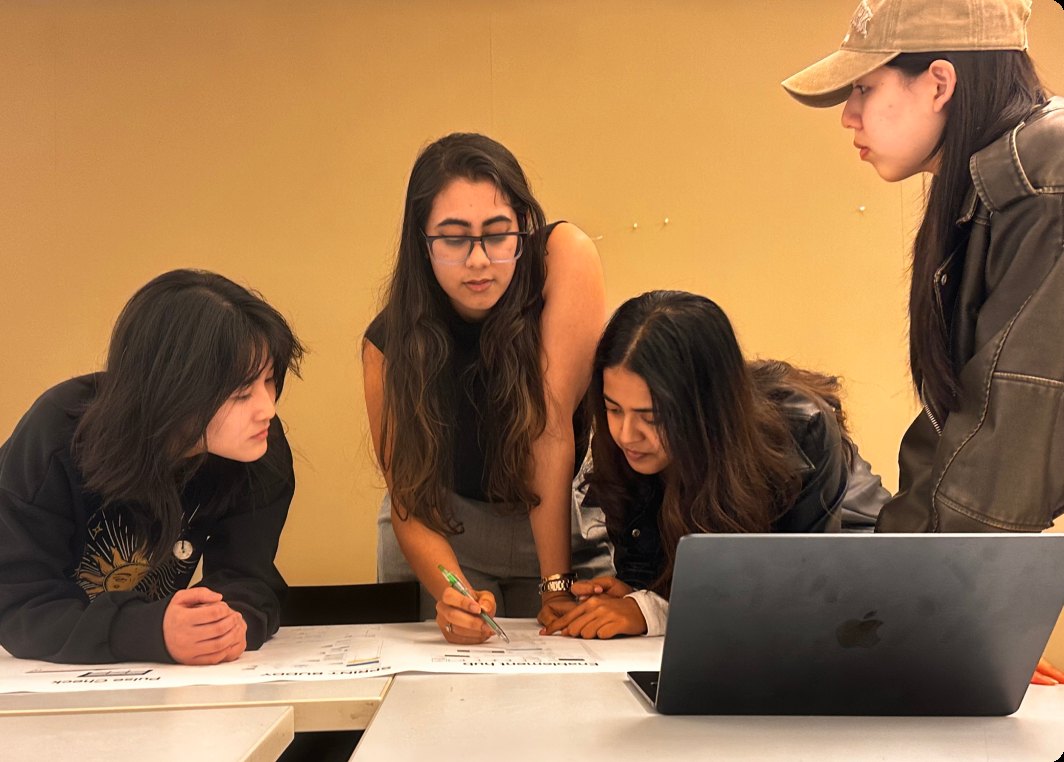
Four design consultants working together around a table covered in printed sprint concepts

The team. A four-person design consultant team working through printed sprint concepts between testing rounds.

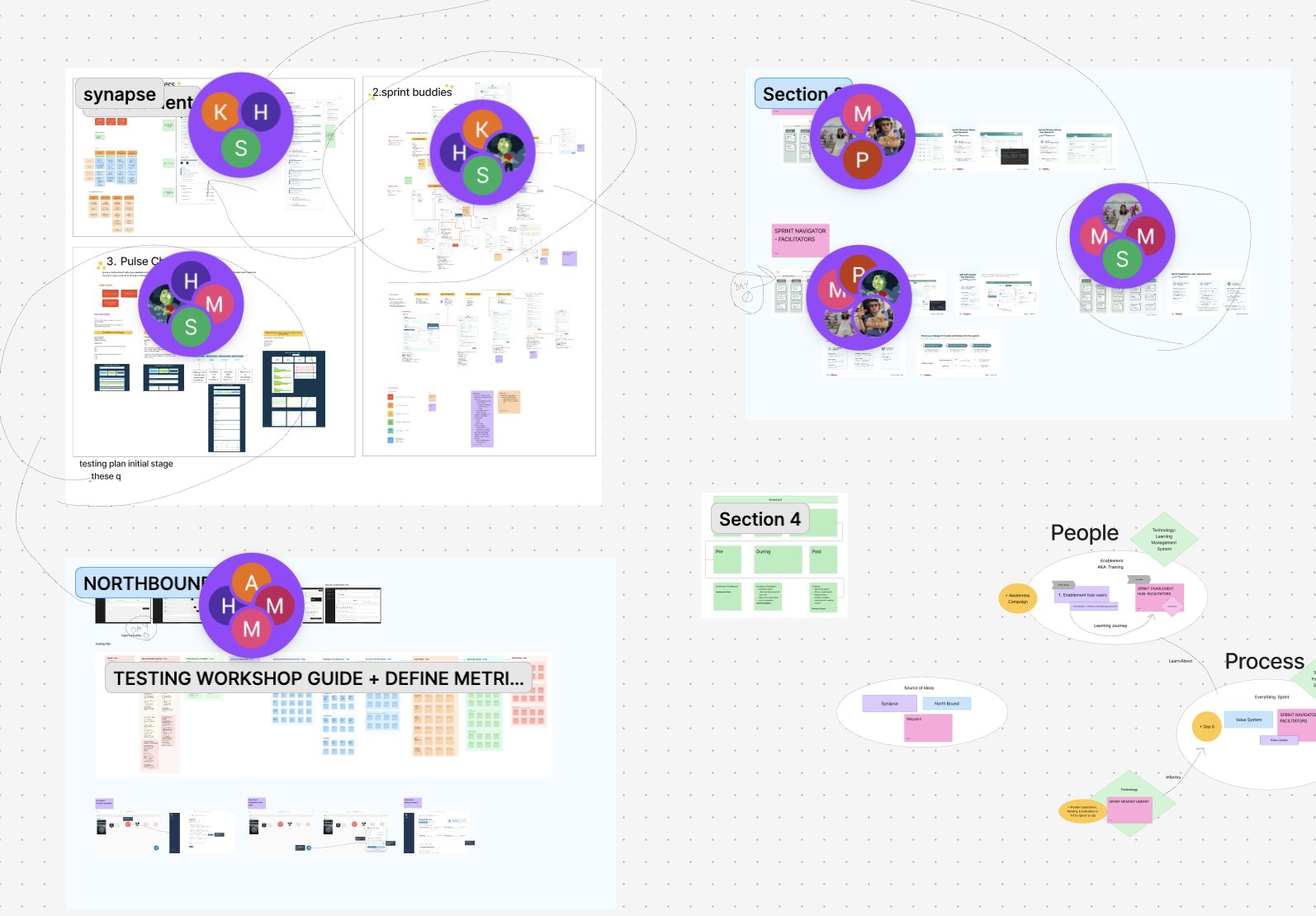
Working canvas showing concept tracks, testing plans, and system diagrams

Working canvas. Parallel concept tracks, testing plans, and the people-process-technology model that shaped the final architecture.

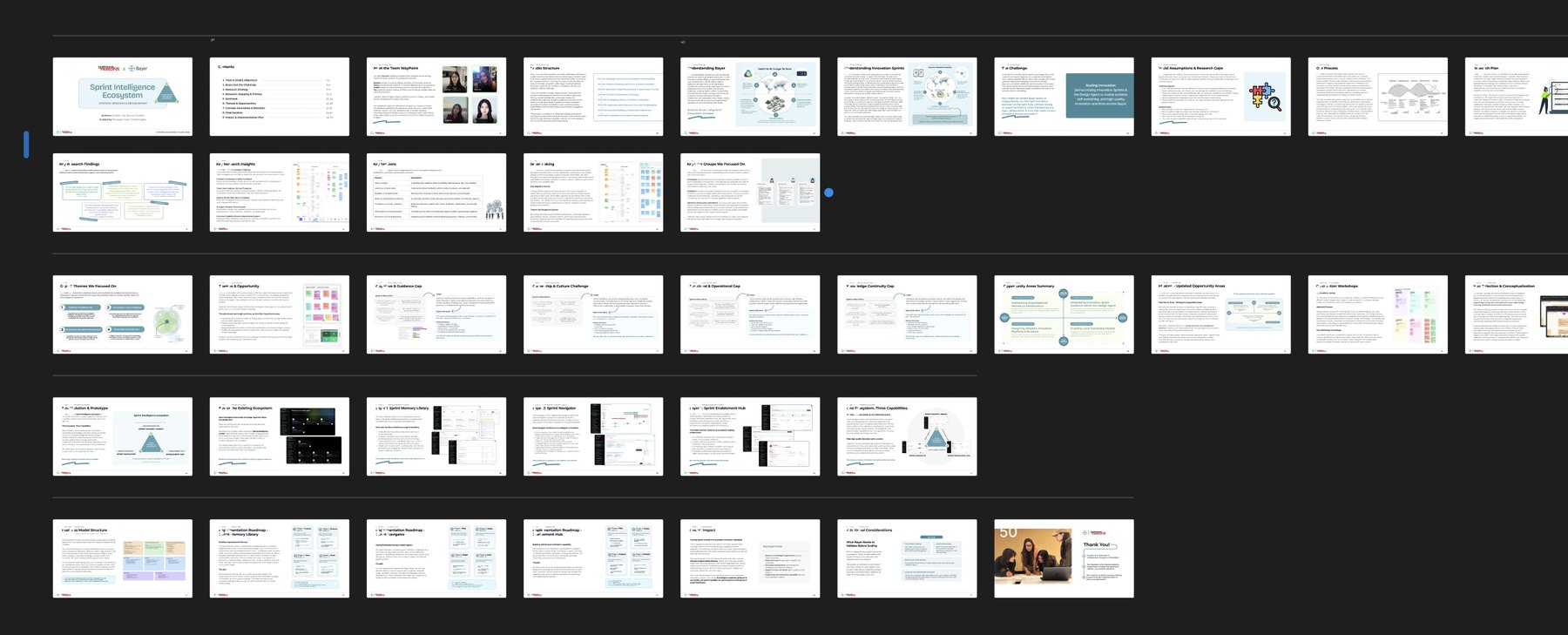
Grid of slides from the final client presentation to Bayer

Client deliverable. The final consulting report taking Bayer from research findings through to the three-capability ecosystem and an implementation roadmap.

01
Research

Interviewed and observed Bayer stakeholders to map where the sprint practice was breaking down.

02
Define

Synthesized findings into four insight clusters and reframed the brief around systems, not people.

03
Design

Co-created the three-tool ecosystem with Bayer's teams across two workshops and iterative rounds.

04
Prototype

Delivered high-fidelity prototypes for all three tools and presented them to Bayer's leadership team.

Contributed to research strategy, insight synthesis, and solution design across all project phases
Facilitated stakeholder interviews and workshops with Bayer teams across global divisions
Led user flow and interaction logic for the Sprint Memory Library and Sprint Navigator
Delivered high-fidelity prototype output as UX engineering, using Claude Code
Produced client-facing consulting presentations for Bayer's innovation leadership
Team. A four-person design consultant team, working directly with Bayer's innovation, product, and facilitation stakeholders. Individual teammates aren't named here out of respect for their own portfolios. Roles and contributions above are mine.